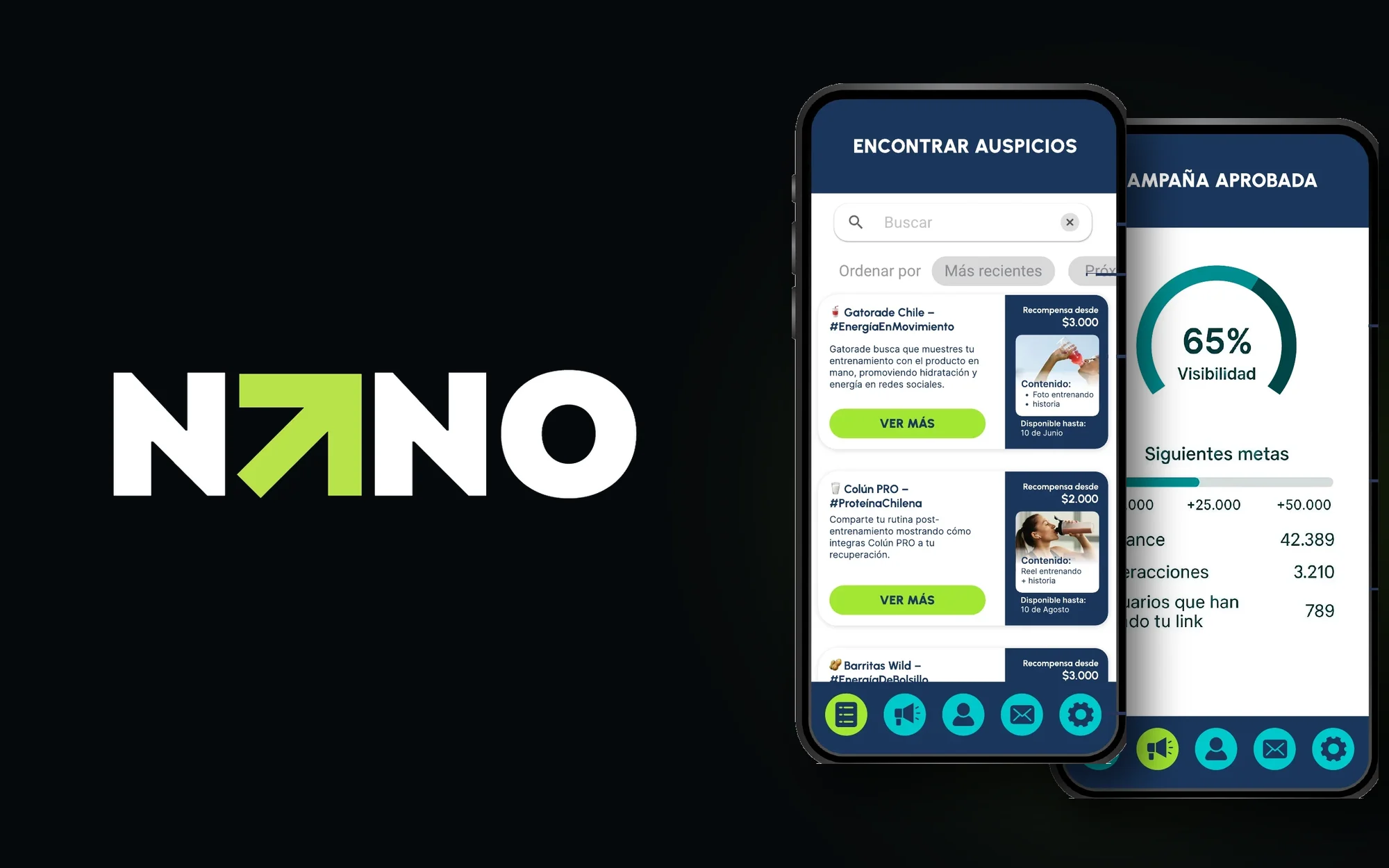
In 30 seconds
- Challenge
- Emerging athletes in Chile pay for their own careers and rarely get sponsors, while brands are tired of expensive influencers.
- My part
- My Master’s thesis: the research, the service and UX/UI design, the brand and a coded prototype.
- Result
- Presented in August 2025. The sales executives I tested it with saw the value right away. It hasn’t launched.
The problem
It started as a question about the future of TV. Working in Canal 13’s commercial team, I watched open TV lose audience and ad share year after year, and set out to redesign how it connects audiences and brands. The research showed TV was too rigid to change from the inside, so I followed the attention to where it had gone: social media and creators.
There I found two problems that fit together. Emerging athletes in Chile pay for their own careers and rarely get sponsors, because brands only find people with big followings. And brands are tired of influencers: they’re expensive, and audiences know they’re being paid.
What I did
01
Talk to both sides
I interviewed 14 people: athletes and a parent on one side, TV and digital sales executives, sports journalists and an influencer agency on the other. I also ran an informal focus group, and set up a Canal 13 totem at the Semana de la Vela regatta in Frutillar that collected 69 answers.
I’d like sponsors so I wouldn’t have to buy anything, but it also embarrasses me. The reels… you have no idea how much I suffered.
Amateur runner, 37
Brands today don’t invest in athletes, they invest in influencers.
Sports journalist, 51
- 14
- in-depth interviews
- 69
- answers in the field
- 18
- findings
The insight
Athletes can’t keep up an online presence. They train all day, don’t know how to edit and don’t want to become influencers. So they stay off brands’ radar, and they need a system that brings them sponsors without asking them to live on social media.
02
The idea: micro-massive marketing
Instead of paying one influencer, a brand activates hundreds of athletes with small, real audiences. Added up, their reach matches a big influencer, and every post reads like a recommendation from someone you know.
Influencer marketing
One big voice
Micro-massive marketing
Many small, real voices
03
Design the service, not just screens
I mapped how the service works for both of its users, the athlete and the brand: what they do, what they see, what happens behind the scenes and what supports it. Pick a phase to see each step.
Applies with their sports background through a form
If rejected: told which requirements are missing and invited to apply again
If accepted: gets access to the platform
Meets the requirements?
Checks real sports activity, social accounts and fit with the platform’s values
Application form
Applicant review system
Accepts the terms of use and code of conduct
Completes a visual and narrative profile
Terms and code of conduct
Profile editor
Profile review and validation
Profile validation system
Reads the briefs of open campaigns
Decides to join one
Makes their own content for the campaign
Uploads the content to the platform
Posts it on their own social accounts
Campaign feed with detailed briefs and examples
“Join this sponsorship” button
If it needs work: asked for specific corrections
Approved: told to publish following the guidelines
Does the content meet the brief?
Checks the post went up correctly
Content approval system
Follows their reach live and the bonuses within reach
Rates the experience and leaves feedback
Notified that the base pay is on its way
Live performance dashboard
Campaign report
Notified of the bonus earned by reach
Bank transfer of the base pay
When the campaign closes, reach is measured
Qualifies for a bonus?
Bank transfer of the bonus
Online banking
Instagram API and internal tracking
Online banking
First meeting: presentation and brief
Approves the campaign?
Signs the sponsorship contract
Receives a campaign proposal built around sport
If not: the campaign is reworked
Sponsorship contract
Follows the campaign’s performance live
Gets access to a live dashboard for the campaign
Matching athletes join and post on their own accounts
The brief is published on the platform
Athletes see the published campaign
Instagram API: profiles of the athletes taking part
Instagram API: content and reach metrics
Receives the campaign’s results report
04
An app for athletes
Find a sponsorship, see exactly what it pays, publish, and watch your reach. Every campaign shows a base pay just for taking part, plus bonuses that grow with reach, so the money is clear before anyone commits.
05
A dashboard for brands
Brands follow reach live and see the best content their athletes made. It also shows how many athletes their budget supported, which matters for the impact side of the pitch.
06
Testing changed the product
My first version gave athletes ready-made video templates so they wouldn’t have to edit. The marketing people I tested it with pushed back: templated content looks like an ad, which is exactly what brands are trying to escape.
I replaced templates with an open brief that each athlete interprets in their own way, and added a second check that the post went up correctly before payment is released.
07
Make the numbers work
The first unit economics left a 10% margin once content review was counted, and bonuses for the best performers pushed it below zero. Cutting what athletes earn would break the point of the project, so I repriced the campaign instead.
- USD 5,000 campaign2,000 athletes × USD 2 + content review10%
- Add reach bonuses+ USD 3,080 for the best performers−52%
- USD 15,000 campaignUSD 15 CPM, within influencer marketing rates49.5%
08
Then prototype it in code
After the thesis I turned the design into a clickable prototype in Next.js, with a view for each role: athletes apply and find campaigns, brands follow their campaigns, and an admin reviews who gets in.
Prototype with sample data. No real users or brands yet.
One brand, many verticals
The name comes from nano-influencers: people with small audiences who trust them. The brand was built from the start to grow beyond sport.
- The A is an arrow pointing up: from small to big, the idea behind micro-massive marketing.
- The solid O is a container. It changes symbol for each vertical, so each one is recognizable without breaking the brand.
NANO Sporties. Emerging athletes. Where NANO starts. The O holds a ball.
NANO Foodies. Home cooks, small food critics and chefs with real reach. The O holds a spoon and fork.
NANO Stylies. People who inspire through how they dress and look after themselves. The O holds sunglasses.
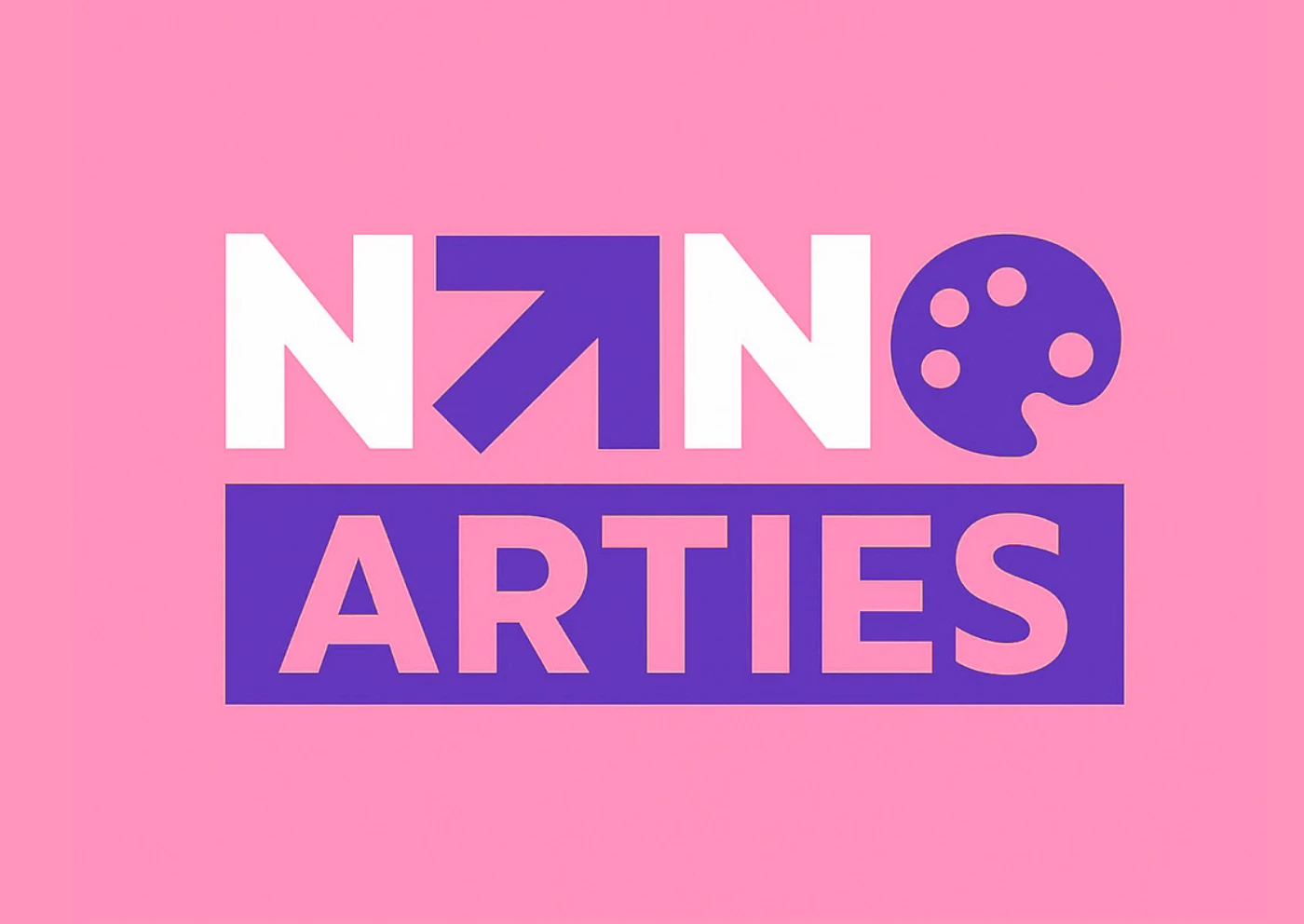
NANO Arties. Illustrators, musicians, makers and emerging artists. The O holds a paint palette.
What happened
Presented as my thesis for the Master’s in Advanced Design at UC in August 2025.
The sales executives I tested it with saw the value right away. One called it “the word of mouth we were always looking for”.
It hasn’t launched: there are no real users yet. The next step would be a pilot with one brand and a few dozen athletes, to check whether the reach and the cost per campaign hold up outside the model.